Regulation and Oversight
Information about National Regulations and Regional and International Initiatives.
Mapping of National Private Security Sectors: regulation and overview
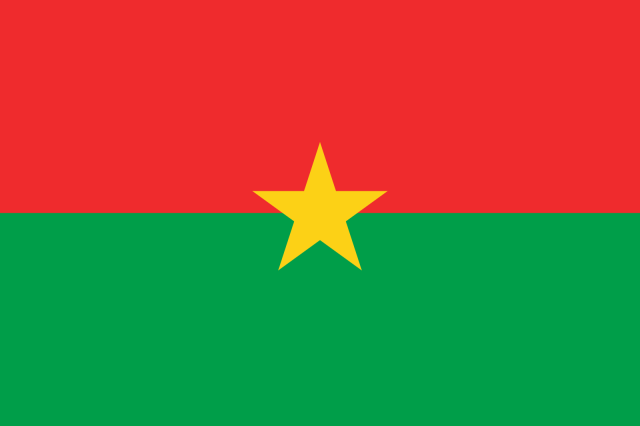
Due to new security challenges, the demand has risen for private security companies (PSCs) to supplement the activities of the public police and military forces. There are more than 60 PSCs currently operating in the country, but the number of PSC personnel is unknown. PSCs in Burkina Faso are regulated by Decree No. 2009-343 among several other pieces of legislation.
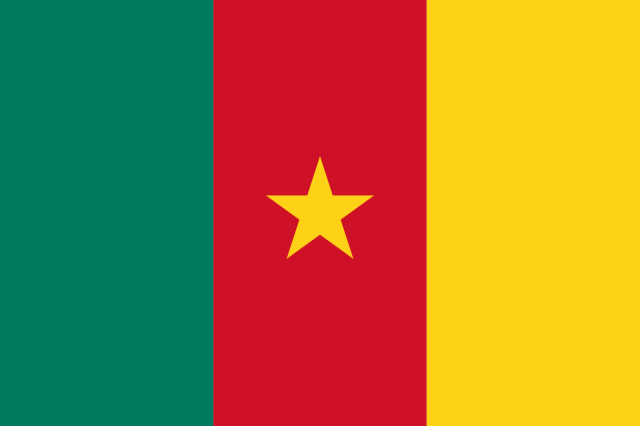
Private security sector has played an important role in in the fight against insecurity and creating thousands of jobs in Cameroon. The legislative and regulatory framework for private security activities in Cameroon is quite extensive. Despite this legal framework, there are still more than one hundred companies in activity while only nine have presidential approval. Therefore, the sector is criticized for its regulatory framework and its lack of efficient implementation of sector regulations.

Very little information is available on the private security industry in Chad, despite various security threats placing a high demand on public security forces and creating a potentially large market for private security. Decree No. 637 of 1996 regulates private security companies in Chad and prohibits their personnel from carrying arms.

Since the 1990's and the liberalisation of the mining sector in regions of the country, private security has experienced dramatic growth. The industrial mining sector has become an important market for the security industry, however reports reveal that this is a source of tension in some communities. There are more than 294 private security companies (PSCs) operating in the DRC and they are regulated by the Ministry of Inteior and Ministerial Order No. 25 of 27 June 2014.

Ethiopia been recognized as the stabilizing factor in the horn of Africa; nevertheless, since 2017, the country is facing security and political crisis. The security threats toward the life and property of the people has increased due to ethnic and political conflicts. Governmental efforts and public security forces have not been sufficient to adequately address the situation.

There is very little information available on the private security industry in Gabon, however it was reported in 2015 that there were an estimated 7,000 PSC personnel employed in the country compared to the Gabonese military consisting of 5,000 personnel. The size of the sector is most likely a result of high crime rates in largers cities, particularly Libreville.

Despite Ghana's stability and healthy economy, it faces several challenges regarding its private security industry, including the existence of more than 1,900 unregistered private security companies (PSCs). The 400 registered PSCs and the 450,000 PSC employees are regulated by the Police Service (Private Security Organisations) Regulations of 1992.

Violent crime, ethnic tensions, and frequent protests have led to an expansion of the private security sector in Guinea. Currently 417 private security companies (PSCs) exist in Guinea and are regulated primarily by Decree No. D/108/PRG of 13 Julz 1998. PSCs fall under the authority of the Ministry of Security and Civil Protection.

Since 2002, the private security sector in Ivory coast has become a major industry, undertaking an important role for the provision of security in the country. The latest available information indicates that 400 private security companies are operating in the country, counting around 70’500 staff.

Private security has become a significant player in Kenya’s security sector. With about 1,000 operating entities, offering a diversified range of services, employing around 800,000 people, and with an estimated annual turnover of over Sh300 billion, it is one of the largest industries in the country.

Liberia has a unique history in the private security sector due to the involvment of private military and security companies (PMSCs) in the creation of the Liberian Armed Forces following the Liberian Civil War in 2003 and the role Liberia has played in private maritime security regulations. The latest studies on private security companies (PSCs) in Liberia state that 127 PSCs and 7,000 PSC personnel are currently operating in the country.

Private Security Companies play an important role in Mali’s economy, providing many jobs and contributing tax revenues. PSCs have an increasingly divers client base, including many government agencies, private companies, banks, diplomatic missions, as well as individuals. There were 263 licensed companies at the end of December 2015.

Limited studies have been conducted on the private security industry in Niger despite prevalent security challenges in the country such as Boko Haram and other jihadists, ethnic rebellions, and military coups. However, it is clear that one area in which private security companies (PSCs) in Niger play a role is the extractive sector.

Private security operations in Nigeria have grown exponentially over the past few decades, just as the nation has experienced the proliferation of internal security challenges at the national and subnational levels across the country. On February 2019, there were about 1110 licensed private guard companies operating in Nigeria, and about 740 unregistered private guard companies under processing and yet to start operations.

The State of Senegal, although having consolidated as a democratic model in the region, has witnessed a decline in its political and institutional framework that has led to a fragmented security sector, where private security companies (PSC) play a major role in reinforcing the public force. There is little data on the size of the sector. A study reports that in 2010, 240 security companies were operating in the country, employing more than 15,000 people.

Private security companies have continuously played a substantial role in the security sector of Sierra Leone. International companies such as Executive Outcomes and Sandline International were directly involved in military activities during Sierra Leone’s 1991-2001 civil war. In 2009 between 30 and 50 PSCs were operating in Sierra Leone, employing up to 5,000 personnel, however more than half of the PSCs in the country are operating illegally so the true number of companies and personnel is unknown.

The security industry represents one of the fastest growing commercial branches in South Africa. South Africa was also one of the first countries to pass legislation regulating foreign military assistance and private military and security companies (PMSCs). Today, South Africa's private security sector is one of the largest in Africa with 8,916 registered private security companies (PSCs) and 522,542 registered PSC personnel.

The private security industry is a fast-growing sector in Tanzania. Currently over 500 private security companies (PSCs) and approximately 1,000,000 PSC personnel are operating in the country, albeit with minimal state regulation. As a result, poor working conditions for PSC personnel and personnel impunity for misconduct and human rights violations are two of the various challenges facing the private security sector in Tanzania.

Minimal information is availabe on the private security industry in Togo, however sources have indicated that the industry faces challenges such as poor working conditions, a lack of professionalism, and an insufficient regulatory framework, if any exists.